


Ten years ago, the Virginia political blogosphere was thriving with ideas and personalities. In the shadow of the great writers — David Foster Wallace, Hunter Thompson, and Christopher Hitchens — we mimicked the great ideas. Waldo Jaquith would spar with yours truly, Vivian Paige would take on Jim Hoeft and Brian Kirwin, Brian Schoeneman (comparatively a late entry) would do battle with Lowell Feld and the boys at Blue Virginia. Andrew Clem would spar within his own party as SWAC Girl (Lynn Mitchell) and others built a regional hub in the Shenandoah.
This was truly a great time.
Fast forward to today. Three new media sites predominate on the right; one does so on the left. That’s it — and rarely do they interact with one another. More alarmingly, rarely do they write with the same style and panache of times past. Probably no other image captures the transition between 2005-2007 better than this image right here:
The dirty little secret that ultimately destroyed the Virginia political blogosphere? Money — not enough, but just enough to lure away the best and brightest. Jaquith eventually marooned himself in the White House. Yours truly ended up at RPV for a time. Lowell Feld sold a book. Jon Henke of QandO ended up moving to the “new media consulting” world (one that soon abandoned politics for corporate media).
…then the bottom feeders arrived. Above all else, this is what killed the modern blogosphere, and it did so as late as ten years ago. The democratization of media, as Jaquith eloquently explained so very recently, opened itself not just to the idea that every opinion was not just valid but capital-T truth, but to the further step that information could be manipulated by active measures — typically in the paid form, and very cheaply.
This instinct is so common among the bottom feeders that it is the only language they know. Every opposing thought earns the modicum of a shill, because at most this is the only reason they themselves would ever entertain an opposing thought. At best, they are terribly unprincipled human beings… and at their worst, they are the proto-genesis of what is now popularly known as “fake news” and disinformation.
A bit of insight: most of the Virginia blogosphere is *not* fake news, but boy would they like to be, which presents a tremendous problem for those of us in Virginia who are writers at heart — all of us with opinions, thoughts, interests, styles and culture of our own — who are going to be torn apart by those with a big “for sale” sign around their necks.
One of the most intense criticisms I hear regardless of where I write is that it just doesn’t quite fit the motif of most publications. My writing style is more Lapham’s Quarterly than National Review. I’ve written about this phenomenon before, though I was much more hopeful back in 2011:
In Virginia, we’ve had the running debate about thoughtful, independent blogging vs. splash-and-trash that has seemingly dominated the political blogosphere since “macaca” in 2006. For many, that is the moment when the Virginia blogosphere gave up the ghost and became the appendages of campaigns and organizations.
Still, after the political supernova that was the macaca incident, there are still bring stars. New bloggers come on the scene every day, but a few individuals who echo the spirit of Montaigne blog for themselves — the only difference being that their ideas, thoughts, and life experiences shared are done so through modern technology.
Only it didn’t happen that way.
But the debt that those of us who are thoughtful; who remain independent of the pay-for-play disease that seems so rife among the vulgar and the common. I ended my thoughts above by pointing towards Sarah Blackwell’s How to Live: A Life of Montaigne in One Question and Twenty Attempts at An Answer and still find myself compelled to point back towards her essay in The Paris Review:
Montaigne raised questions rather than giving answers. He wrote about whatever caught his eye: war, psychology, animals, sex, magic, diplomacy, vanity, glory, violence, hermaphroditism, self-doubt. Most of all, he wrote about himself and was amazed at the variety he found within. “I cannot keep my subject still,” he said. “It goes along befuddled and staggering, with a natural drunkenness.” His writing followed the same wayward path.
Giorgio Agamben is an author I have been recently introduced to, and what an introduction it has been. Though familiar with his writings (specifically as they relate to Carl Schmitt’s The Crisis of Parliamentary Democracy), I had never really dove into his thought with the appropriate background. Thankfully, I had that opportunity upon a reading of What Is An Apparatus? this fall.
In brief, an apparatus is a specific disposition — a power structure that imposes itself on the individual and shapes the person’s thought. Agamben points to the traditional dispositions — church, language and so forth — and imposes a different set of dispositions that exist for their own sake — technology, consumerism and the like.
The real task is to separate one’s self from these false apparatus (plural) within the greater apparatus (singular) of who we really are. Human beings finding it quite useful and convenient to generalize and categorize by language, the moment we name things we find a means of controlling them (shills, anyone?) and thereby bending them to our purposes — mostly towards the illegitimate. In the words of Agamben:
This, above all, is the source of the peculiar uneasiness of power precisely during an era in which it confronts the most docile and cowardly social body that has ever existed in human history. It is only an apparent (dispositive?) paradox that the harmless citizen of postindustrial democracies… who readily does everything he is asked to, inasmuch as he leaves his everyday gestures and his health, his amusements and his occupations, his diet and his desires, to be commanded and controlled in the slightest detail by apparatuses (dispositions), is also considered by power — perhaps precisely because of this — as a potential terrorist…. In the eyes of authority — and maybe rightly so — nothing looks more like a terrorist than the ordinary man. (emphasis and ellipses added)
Agamben wrote this in 1999, months before the September 11th terrorist attacks. Could anyone have more accurately predicted the era of biometric scanners, active measures vs. disinformation, and the treatment of every citizen (immigrant or otherwise) as a potential invader, as a potential threat, as as potential terrorist?
This idea of potentia strikes one as a combination of two sentiments: ability and force. It is precisely the potentia that Vaclav Havel in the midst of totalitarian Czechoslovakia in the late 1970s struggled to express in the middle of a repressive communist regime — one he gave voice towards in his samizdat essay Power to the Powerless when he expressed the concept of living in truth versus living in the lie of society — the disposition implied in the apparatus:
As long as living a lie is not confronted with living the truth, the perspective needed to expose its mendacity is lacking. As soon as the alternative appears, however, it threatens the very existence of appearance and living a lie in terms of what they are, both their essence and their all-inclusiveness. And at the same time, it is utterly unimportant how large a space this alternative occupies: its power does not consist in its physical attributes but in the light it casts on those pillars of the system and on its unstable foundations. . . . In the post-totalitarian system, therefore, living within the truth has more than a mere existential dimension (returning humanity to its inherent nature), or a noetic dimension (revealing reality as it is), or a moral dimension (setting an example for others). It also has an unambiguous political dimension. If the main pillar of the system is living a lie, then it is not surprising that the fundamental threat to it is living the truth. This is why it must be suppressed more severely than anything else. (emphasis added)
It should not surprise us that such thinking (and counter-thinking) has arrived on America’s shores. In fact, it has been here for some time, as the liberal and mainstream media has asked ‘the blogosphere’ to live within the lie for some time, and when we rebelled against this narrative/disposition, the lie soon revisited itself in the most common of disguises: lucre.
This brings us back to the Virginia blogosphere in abstract, and perhaps the idea of “fake news” specifically. Very recently, the U.S. House of Representatives passed by a bi-partisan vote of H.R. 6393 (the Intelligence Authorization Act for Fiscal Year 2017).
Sounds honest enough… until you get to Title V where the bill begins talking about creating “an interagency committee to counter active measures by the Russian Federation to exert covert influence.” This committee — operating under the orders of the White House — specifically “by exposing falsehoods, agents of influence, corruption, human rights abuses, terrorism, and assassinations carried out by the security services or political elites of the Russian Federation or their proxies.”
Short version: the Alien and Sedition Acts of 1798… but just with the “sedition” parts.
Of course, the presence of “fake news” is a problem. Unlike my friends in Washington (whom I can only assume are responding to the actions of an unfriendly government with the only tools a government can respond — by force), this is not a problem where good speech can replace bad speech. Rather, this is an epistemic problem created by the democratization of media as pointed out by Jaquith. It is not going to disappear by creating alternative narratives, but rather through the creation of alternative dispositions — and ultimately, alternative apparatus.
There’s one small problem with this. Both the political left and the political right are keenly aware of this. To wit, a recent interview with Time Warner’s CEO describing how the Democratic Party — not the Republican Party — has attempted to alter the American disposition towards leftist ideas:
“That was worrying me more, because the press tends to miss that because they tend to lean that way, and therefore they were supporting what they were viewing, I think overly charitably, as something in cleaning up money in politics when in fact what it would do is restrain multiple voices,” Bewkes argued. “So, I thought the threat to the First Amendment came from the Democratic side more. I think there won’t be a serious effort on the Republican side.”
. . .
“We were still before the election and we know some of the strains of populism in that election on both sides,” he said. “I’m not saying whether everybody thought it was the cable company merging with a phone company — they’re different competitive issues — but it isn’t that, and I think when it becomes clear what we’re doing it will become clear to everyone that it will be pro-competitive, pro-consumer and improve competition in advertising.”
That very last part about competition, consumerism, and advertising? That is the entire epistemic question. It is the element within the United States that makes us so susceptible to Russian-style disinformation and “active measures” that introduce a grain of truth and then twist it to serve a different disposition, a different narrative.
So what is to be done? First and foremost, the little white blood cells of society need to be recognized for what they are. Agamben describes them as “contemporaries” but a more anglicized translation might carry a more healthy respect for the critic, the individuals that pursue the variety and “natural drunkenness” of the human condition. In Virginia, these people encompass the op-ed writers of the mainstream media and the contemporaries of the new — not exclusive to politics, but those who can turn with kaleidoscopic vitality of who we are, reaching back into our past and exploring the future in the words of the present.
That’s a complicated task, but it is also a tremendous moral responsibility.
Cicero began his arguments against Catiline with the lamentation, O tempore! O mores! The times and the moral conditions of the present certainly cannot be more intimidating than they were during the time of Vaclav Havel. Certainly they are more interesting than those of Michel de Montaigne.
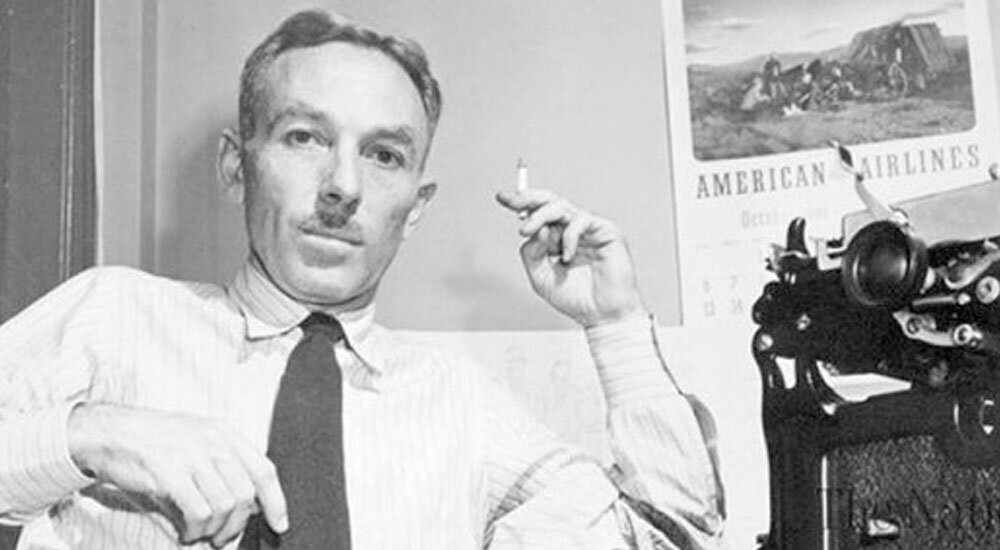
An April 2012 article in The Atlantic outlined the challenge of the writer, and Maria Popova (who currently curates the blog Brain Pickings — and it is a tremendous read) offers in contrast to the mendacity and mediocrity of the world the example of E.B. White, writer for The New Yorker and perhaps better known for his book, Charlotte’s Web. Popova quotes White on the responsibilities of the writer:
A writer should concern himself with whatever absorbs his fancy, stirs his heart, and unlimbers his typewriter. I feel no obligation to deal with politics. I do feel a responsibility to society because of going into print: a writer has the duty to be good, not lousy; true, not false; lively, not dull; accurate, not full of error. He should tend to lift people up, not lower them down. Writers do not merely reflect and interpret life, they inform and shape life.
— E.B. White, interview with George Plimpton, The Paris Review (1969)
Popova is perhaps the best example of web curation, where the writer distills the information of the world into whatever impresses her, thus building something more than just a Millennial-improvised “brand” (which is probably more a Gen-X influenced term of Seth Godin’s) into something much more valuable — beyond authenticity and into the sincere.
Once upon a time in Virginia, the most popular blog was really not much of a blog at all — he was a curator. The old Virginia Conservative — John Behan of old — sought out the best minds and promoted them. Behan was our very own Instapundit, and the impact of being listed on Virginia Conservative was tremendous.
This here is the twin lesson for those of us who have not sold out, for those of us who have ideas and still seek that interaction and exchange we enjoyed in the halcyon days of our own republic of letters.
As writers, we have a moral duty to write — to curate and expand — to challenge the mediocrity of “fake news” and drive-by-media (new and old), to condemn the bottom feeders and praise the curators — and defend the right when under siege by mercenaries and pretenders.
This is an active vocation not for the meek or mild, but for those with the character of conviction that those with differing opinions are not our enemies, but our allies in the cause. That some of us will rotate out into the realm of the honest and paid… but some of us who have the luxury of opinions will have the absolute right to maintain them.
This disposition/apparatus is one worth defending. This apparatus of critics is also the antibody of social criticism required to push back against either “fake news” or “paid news” masquerading as honest opinion.
Of course, this has one obvious flaw — that aptitude of our public to not sell out in turn, to be more discerning and less malleable. We should take courage in this fact, that with a certain Jeffersonian optimism, our neighbors and friends and readers will recognize the right and shun the wrong, even if they too feel the draw of filthy lucre and choose to believe otherwise. Conscience is a tricky thing; concupiscence quite another. If Jefferson’s optimism is the correct choice, if Havel and Montaigne are right, then we have nothing to fear from being on the right side of history.
Certainly the slanderers and malingers of every age pay their tribute — jealousy being the tribute mediocrity pays to genius. Screw ’em — write anyway.
If we are wrong? Then we have nothing to fear from taking up our pen and striking down the heresies of the world. As Jefferson remarked to Madison in the darkest days of the Federalist reign:
For god’s sake, my dear Sir, take up your pen, select the most striking heresies, and cut him to peices (sic) in the face of the public.
— Thomas Jefferson to James Madison, (07 July 1793)
Take up your pen, ladies and gentlemen. You have a moral duty to do so.