

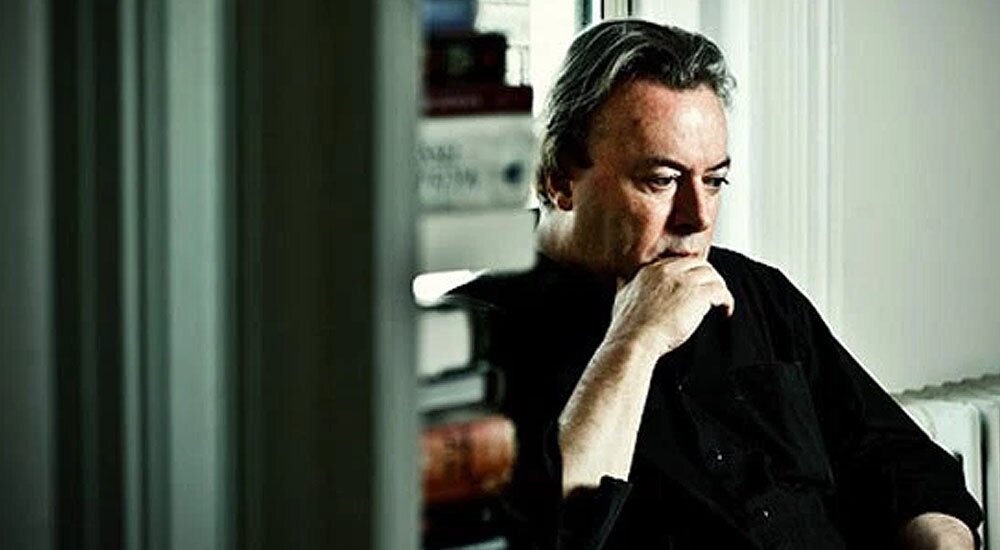
For those who have never treated themselves to the scathing wit of Christopher Hitchens, the gaping hole felt by those who enjoyed his work and his opinion journalism while he was alive still remains five years after his passing.
One of his first books — or at least, the one that made its introduction to your humble author — was Letters to a Young Contrarian. Written in 2001 in a time before al-Qaeda and the internet, there was a specific challenge that was laid down in its pages that demanded something more of the art of public critique. “Don’t be afraid to be thought arrogant or selfish” was tremendous advice for a world where the postmodern has been given free range in an era of selfies and social media.
This, of course, was in the post-Cold War era, where men like Vaclav Havel wrote about the Power of the Powerless and the might of art, literature, the pen, and beauty could do to change the condition of the masses in the face of impotence, and specifically the sort of impotence that could only lash out with the illegitimacy of violence. This was a time where newsprint reached its apex in the post-informational age, where the internet and social media had yet to radicalize and democratize news. Intellectuals were still in vogue, people thought of themselves as the next David Foster Wallace in an America that didn’t judge you too harshly if you smoked cigarettes in a coffee house and twisted yourself into a simulacrum of Seattle’s grunge. These were acceptable sins.
Yet 15 years later, the critic is viewed as the traitor. An era that presumptive rewards individualism is bent towards conformity. We celebrate the mediocre and call it talent. Refinement is more often the consumable rather than the durable sort. If politics follows culture, and culture follows identity, is it any small wonder why our public officials and so-called social leaders consist of Kim Kardashian and late night talk show hosts rather than William F. Buckley Jr. and Gore Vidal?
Long gone are these thoughts. Excellence is substituted for the make-do; liberty for equality, freedom for conformity. Huxley defeats Orwell. Entertainment lords over information. We enter the world of Jonah Goldberg’s observation of the substitution of confidence for sneering, where “if it is funny, it must be true” and wonder why intellectuals fail to have substantive conversations with others.
So perhaps the grand lesson for intellectuals is to recapture the lesson Hitchens taught us all — that the best weapon against the ironic is the sardonic. Hitchens’ definition of the postmodern intellectual remains the best lamppost for the future:
One might do worse than to say that an intellectual is someone who does not attempt to soar on the thermals of public opinion. There ought to be a word for those men and women who do their own thinking; who are willing to stand the accusation of “elitism” (or at least to prefer it to the idea of populism); who care for language above all and guess its subtle relationship to truth; and who are willing and able to nail a lie. If such a person should also have a sense of irony and a feeling for history, then, as the French say, tant mieux. An intellectual need not be one who, in a well-known but essentially meaningless phrase, “speaks truth to power.” (Chomsky has dryly reminded us that power often knows the truth well enough.) However, the attitude towards authority should probably be sceptical, as should the attitude towards utopia, let alone to heaven or hell. Other aims should include the ability to survey the present through the optic of a historian, the past with the perspective of the living, and the culture and language of others with the equipment of an internationalist. In other words, the higher one comes in any “approval” rating of this calling, the more uneasily one must doubt one’s claim to the title in the first place.
Well put and well said.